How to Design an Efficient Dental Clinic Space
Hey there, fellow dentists!
I’m Xiao Tie, a professional designer specializing in dental clinic space design. If you’re planning a new clinic or feel like your current layout just isn’t working, I’d like to talk to you about how to make your space your best “silent partner” through design.
Why Does Your Clinic Space Feel “Off”?
Many people think design is just about picking a paint color. But real dental clinic space design solves deeper problems:
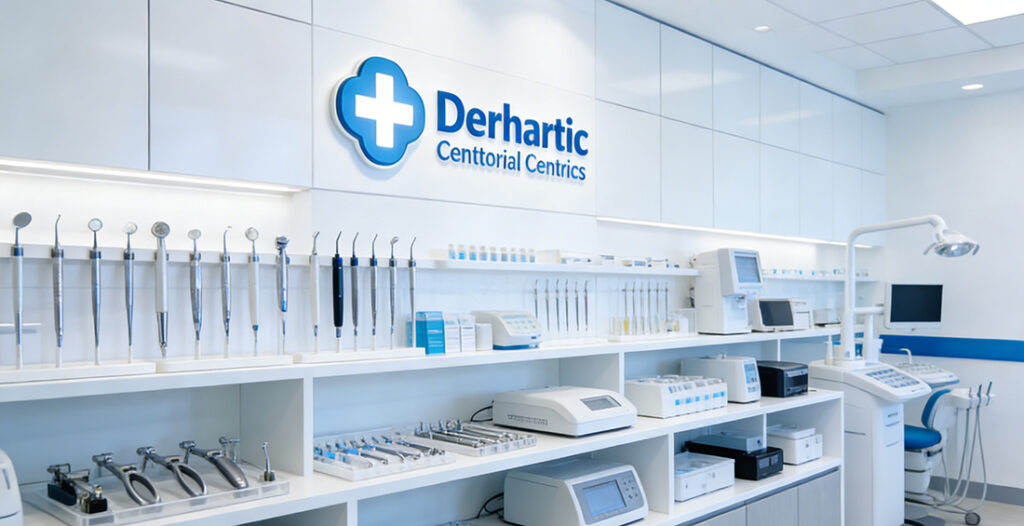
- Why is the front desk always cluttered and messy?
- Why is your assistant always turning around to look for things, disrupting the treatment flow?
- Why do patients feel tense the moment they walk in, even if your bedside manner is great?
- Why can you only see a few patients a day even with three treatment rooms?
These are all ways your space is “talking”—and it’s not saying good things.
Design Principle: Design Your Clinic Like a Precision Instrument
A good clinic isn’t just a collection of rooms; it’s a “precision instrument” custom-built for efficient care.
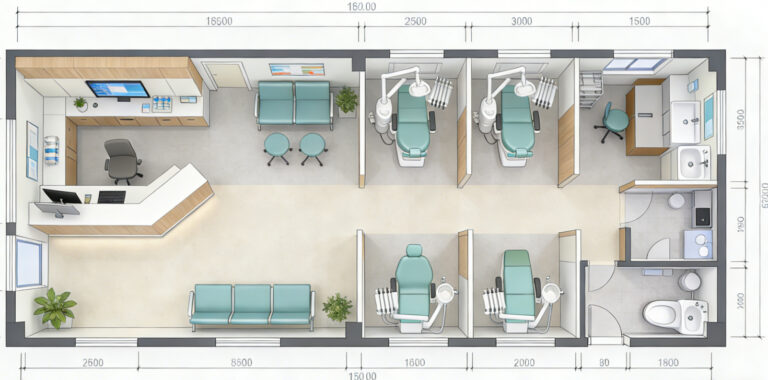
1. Flow Design: Make Everyone “Automatically” Go to the Right Place
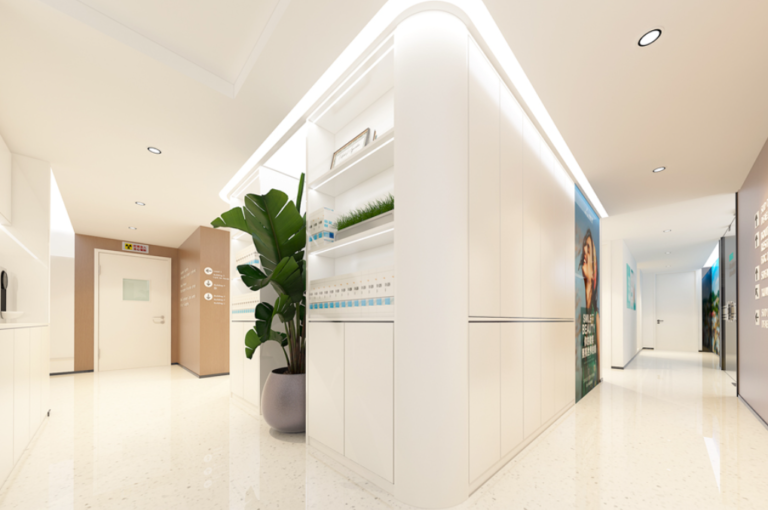
- Patient Flow should be a clear, calming, one-way stream. From entry, waiting, and treatment to exit, avoid making them backtrack or cross paths with others. Think of the feel of a five-star hotel lobby—well-directed and anxiety-free.
- Staff Flow must be minimal and efficient. In the treatment room, create a “work triangle” (you – assistant – equipment), ensuring all key instruments and materials are within one step of turning around. Less unnecessary movement means more time focused on treatment.
2. The Treatment Room: Your “Command Center”
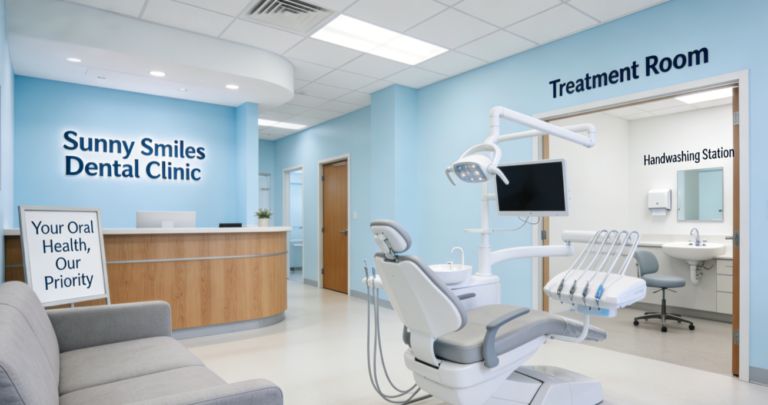
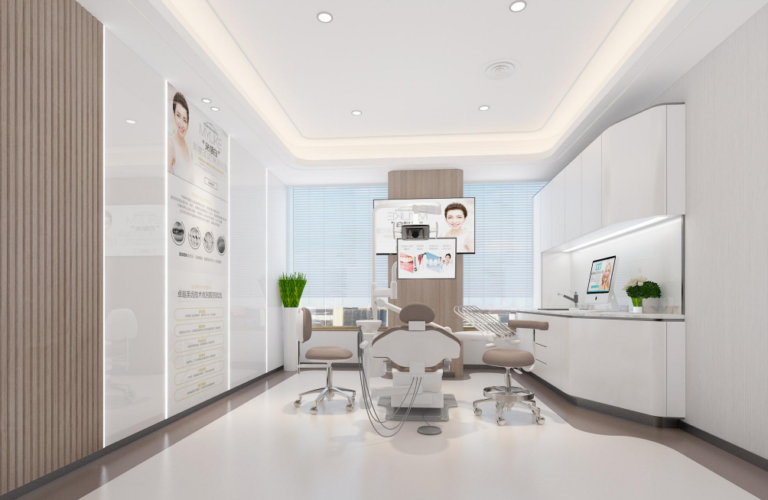
Don’t just see the treatment room as a space for a chair. In modern dental clinic space design, it’s the core module integrating technology, storage, and workflow.
- “De-clutter” Design: Mount monitors on arms, hide cables in walls, and keep only treatment-essential items on countertops. This isn’t just for looks; it reduces cleaning headaches and lets you and your assistant focus 100% on the patient.
- Sound Control Matters: Use some acoustic panels on walls and ceilings. When the drill sound becomes muffled and distant, stress levels drop for both you and your patient.
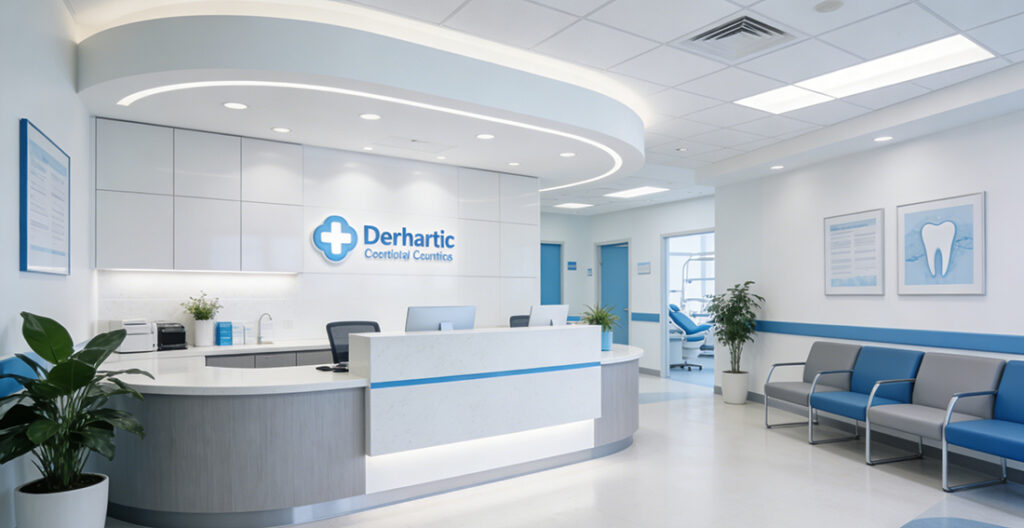
3. The Front Desk & Waiting Area: Creating the “First and Last Impression”
This is where the experience starts and ends.
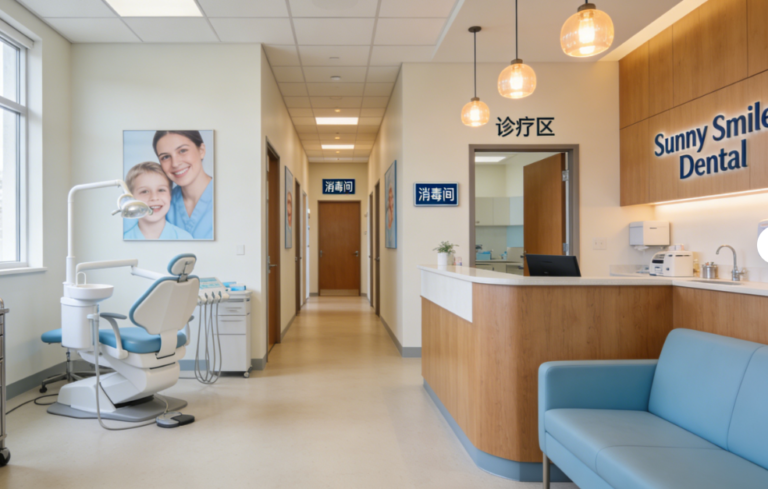
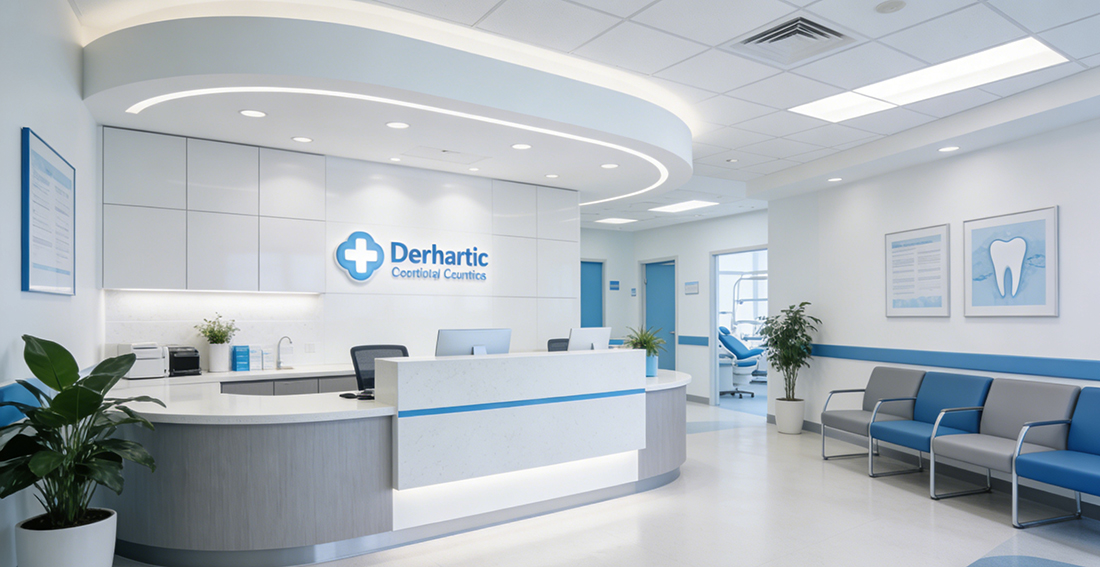
- The Front Desk is the “Control Tower”: The receptionist should have a clear line of sight to the door, waiting area, and main corridors. This is about security and control. Hide files and printers to keep the desk professional and clean.
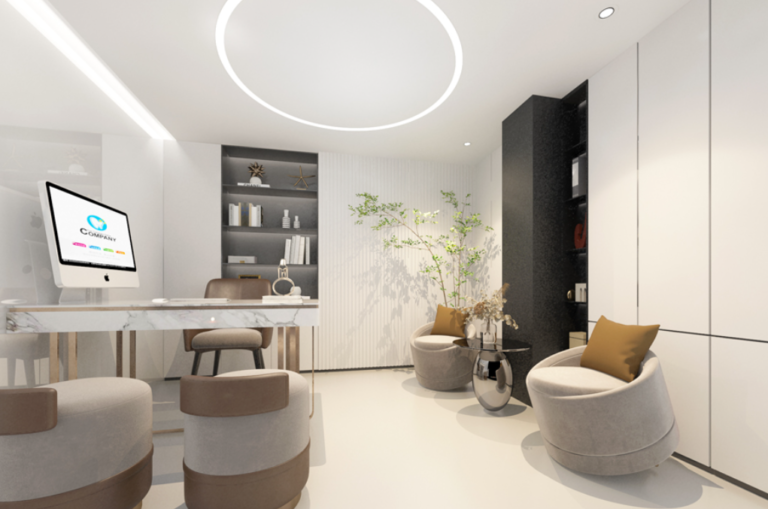
- Redefine “Waiting”: Ditch the row of plastic chairs. Turn it into a relaxing “lobby” for patients. Comfortable sofas, natural light, charging ports, a complimentary coffee bar—these aren’t about pampering patients; they say, “We care about your comfort, we pay attention to details.” This works wonders for building trust.
4. Design for Your Team
A workspace that makes your staff feel considered and respected directly improves service quality and retention.
- Design a functional, bright sterilization room with a clear workflow to avoid cross-contamination.
- Create a small staff break area, even if it’s just a quiet corner. A team that can grab a quick coffee and a breather is a more patient team.
Spending Smart: Why is Professional Design Worth the Investment?
You might be thinking, “How much will this cost?” Let’s look at it differently:
A one-time design investment buys you:
- The ability to see 1-2 more patients per day: Time saved by an efficient layout is real.
- Significantly reduced staff fatigue and turnover: A good work environment is a powerful intangible benefit.
- Powerful word-of-mouth marketing: Patients can feel the “difference.” They’ll say, “I don’t know why, but Dr. XX’s clinic just feels more professional and comfortable.” That kind of reputation can’t be bought with ads.
- Avoidance of expensive renovation mistakes: Figuring out the layout yourself often leads to costly walls-being-knocked-down-redos later. Professional design gets it right the first time, saving money in the long run.
How to Get Started?
- Don’t think about colors yet! Start with a blank slate. List the top 5 daily “little things” that frustrate you most (e.g., “I’m always looking for…”, “Patients always ask…”).
- Observe and Document: Spend half a day in your current clinic. Use your phone to take pictures of congestion points and clutter piles.
- Talk to the Right Person: Consult with a designer who understands dental clinic space design and, more importantly, understands dental workflow. They can translate your pain points into solutions.
Your clinic space should be your most capable assistant—it works quietly to smooth the workflow, make patients feel at ease, and let you perform at 100% of your professional ability.
If you’re struggling with space issues or want to avoid common pitfalls when opening a new practice, I’m happy to share more details and case studies. Here’s to creating a clinic that’s not only efficient but also one you look forward to walking into every day!
Best regards,
Xiao Tie
Dental Clinic Space Design Consultant
You May Also Like
How to improve the layout of a small dental clinic